 Top Ideas
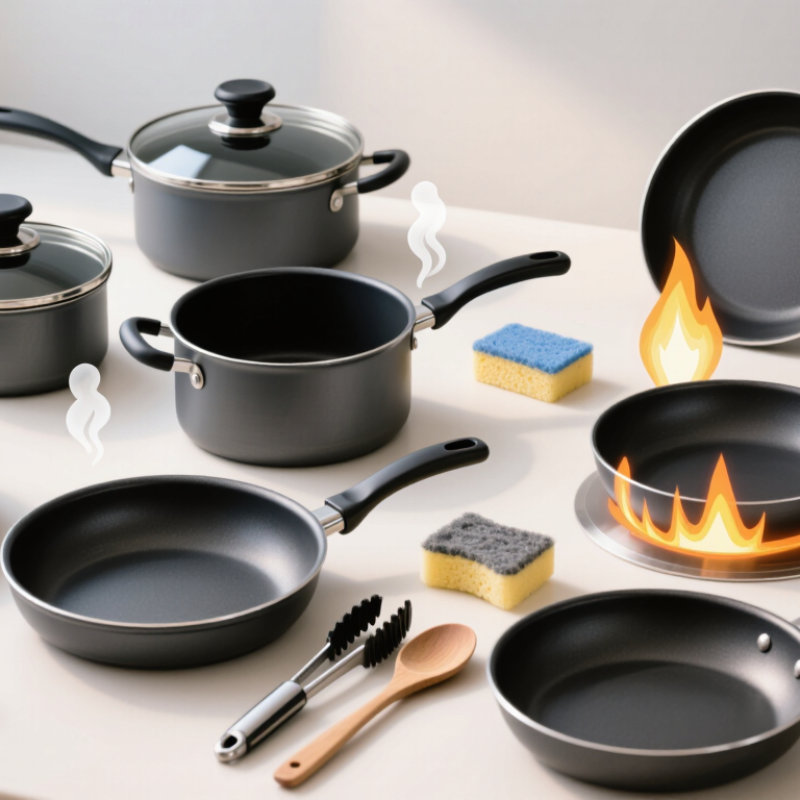
10 Tips for Choosing Non Toxic Non Stick Cookware
Understanding the coating matters more than the word “non-toxic.”
1. Check whether the surface uses PTFE, ceramic sol-gel, enamel, or no coating. PTFE is a fluoropolymer, while ceramic coatings usually use silica-based materials.
2. Look for clear statements about PFAS and PFOA. Avoid vague claims.
3. Read the coating label.
4. Prefer products with documented food-contact testing from independent laboratories.
5. Ask whether testing covers the finished pan, not only its raw materials.
Heat changes everything.
6. Choose cookware with a stable, heat-resistant handle and a visible maximum temperature. Overheated fluoropolymer coatings can degrade and release irritating fumes, although normal cooking temperatures are generally considered safer.
7. Use medium heat for empty preheating.
8. Ventilate your kitchen. The U.S. Environmental Protection Agency’s 2024 drinking-water rule set limits of 4.0 nanograms per liter for PFOA and PFOS, showing how extremely low exposure levels can matter. This rule does not directly regulate cookware, but it offers useful risk perspective.
9. Replace pans when coatings blister, peel, or expose the base.
10. Match the material to your habits. Stainless steel or seasoned cast iron may suit high-heat cooking better. EFSA’s 2020 scientific opinion established a combined tolerable weekly intake of 4.4 nanograms per kilogram of body weight for four PFAS. That figure concerns dietary exposure, not one pan alone.
I once judged cookware by its smooth surface; that was careless. Certification helps, but it cannot replace sensible heat control, gentle utensils, and regular inspection. Non-toxic is not an absolute promise. It is a claim worth questioning.
