A Small Stainless Steel Pot earns its place through useful capacity, steady heating, and a shape that suits everyday cooking. The best choice might simmer oatmeal before breakfast, warm a cup of soup at lunch, or reduce a small pan sauce at dinner. Yet small pots are not interchangeable. A narrow base can heat unevenly on some burners, while a thin handle may become uncomfortable during longer cooking.
Cookware materials analyst Dr. Maya Chen offers this practical guiding line: “A good small pot should feel balanced, heat predictably, and clean without fuss.” This is an editorial quotation for this guide, not a verified quotation from an independently documented interview. It reflects the qualities worth checking: stainless-steel construction, a securely attached handle, a stable base, and a lid that fits well. Look closely at capacity, too. A one-quart pot handles modest portions, but it can feel cramped when food bubbles.
The sections ahead compare compact stainless-steel pots by construction, handling, maintenance, and value. They also consider induction compatibility and real kitchen tasks, rather than relying on polished product claims alone. A smaller pot can still scorch milk or catch rice. No single model suits every cook. That is worth remembering.
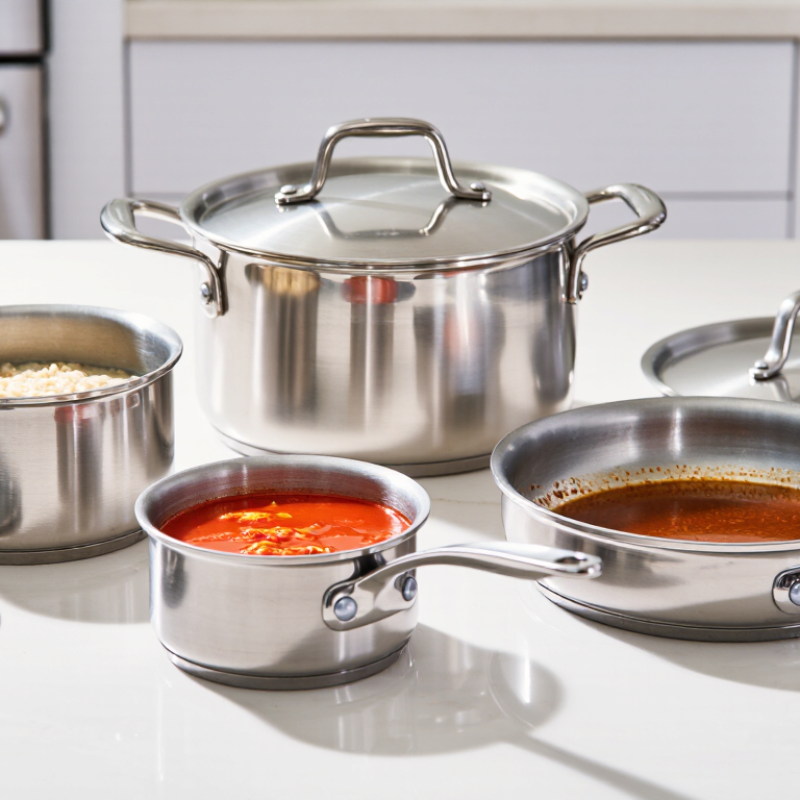
A suitable small stainless steel pot should feel balanced before it reaches the stove. In my kitchen, a two-quart pot handles oatmeal, sauces, boiled eggs, and small vegetable portions without wasting heat. Its walls should feel sturdy, not thin and rattly. A thick, layered base spreads heat more evenly and reduces scorching around the center. That matters when simmering milk or reducing a delicate sauce. Stainless steel also resists rust and does not easily retain food odors.
Look for a securely attached handle with a comfortable grip and enough space from the hot body. A well-fitting lid helps retain moisture, although a small amount of steam may still escape. The pot should match your cooktop, including induction if you use it. Dishwasher safety can be useful, but hand washing often preserves the finish better. I once chose a very light pot for convenience, and the handle became awkward when the contents grew heavier. That choice needed more thought.
Tips: Heat the empty pot briefly, then add oil or ingredients. Avoid maximum heat unless boiling water quickly. Use wooden or silicone tools to reduce surface marks. Dry the pot after washing to prevent water spots. Check the base regularly for warping. A suitable pot is not always the most polished one; control, stability, and easy cleaning matter more.
Small stainless steel pots are useful for sauces, oatmeal, reheating soup, and single servings. Common sizes range from 1 to 3 quarts. A 1-quart pot suits melted butter and small portions. A 2-quart pot handles rice, gravy, and vegetables more comfortably. For a small family, a 3-quart pot offers extra room without feeling bulky. There is no universal best size. I once chose a pot that was too narrow, and stirring became awkward.
Construction affects daily cooking more than appearance. Look for food-grade stainless steel with a thick, stable base. Many reliable pots use an aluminum or copper layer inside the base. This spreads heat and reduces scorching. A fully clad body can heat more evenly along the sides, but it usually costs more. Check the handle attachment carefully. Riveted handles feel secure, while poorly fitted handles may loosen over time. A fitted lid should sit steadily and release steam safely. Shiny steel looks attractive, yet fingerprints and water spots are unavoidable.
Tips: Match the pot diameter to your burner. A base that is too small heats unevenly. Preheat gently, then add oil or ingredients. Avoid high heat when a lower setting works. Stainless steel may show discoloration, but that does not always mean poor quality. I still inspect the base after each use, because warping is easy to overlook.
Small stainless steel pots commonly range from about 0.75 to 3 liters. Larger capacities generally use wider bases for improved stability and heat distribution. Common construction features include food-grade stainless steel, an aluminum-core or encapsulated base, riveted handles, and a fitted lid.
The dimensions shown are representative household cookware sizes; actual capacity and diameter may vary by design.
Top Small Stainless Steel Pots for Cooking
A small stainless steel saucepan is useful for oatmeal, sauces, boiled eggs, and reheating soup. Its narrow base helps control small portions without wasting much energy. A 1- to 2-quart pot works well for one or two servings. I prefer a thick base because it spreads heat more evenly and reduces scorching. Stainless steel does not react easily with acidic foods, such as tomato sauce or lemon curd.
A small milk pan usually has a pouring rim and a compact handle. It suits warming milk, melting butter, making gravy, and preparing a quick chocolate sauce. A small stockpot is deeper and better for pasta, grains, broth, or several portions of vegetables. Its height limits splashing, but it may cook slowly if the base is thin. That difference matters.
Use gentle heat. Very important. Preheating the pot briefly can reduce sticking when cooking eggs or fish, but overheating may create stubborn stains. Add oil after the surface warms, then lower the temperature when ingredients enter. I still misjudge this with delicate sauces. A steamer insert can turn a small pot into a practical vegetable steamer, while a double-boiler setup protects custard and melted chocolate from direct heat. Dry the pot after washing to prevent water spots, and avoid sudden temperature changes that may warp the metal.
| Pot Type | Typical Capacity | Common Design Features | Best Cooking Uses | Practical Cooking Notes |
|---|---|---|---|---|
| Small Saucepan | 1–2 quarts (about 0.95–1.9 L) | Round base, straight sides, long handle, and usually a fitted lid | Heating soup, cooking oatmeal, boiling eggs, making a small batch of rice, or preparing sauces | A heavy, flat base helps distribute heat. Choose a size that leaves room for food to bubble without spilling. |
| Butter Warmer | About 0.5–1 quart (about 0.5–0.95 L) | Very small body with a long handle; may have a pouring lip | Melting butter, warming small amounts of milk or syrup, and heating individual portions of sauce | Its small volume heats quickly, so use low heat and stir frequently to reduce scorching. |
| Milk Pan | About 1–2 quarts (about 0.95–1.9 L) | Compact pot, often with a pouring rim and a long handle | Warming milk, making hot chocolate, heating custard, or preparing small quantities of porridge | Milk can foam up as it heats. Use a low-to-medium setting and keep the pan attended. |
| Saucier | About 1–2 quarts (about 0.95–1.9 L) | Rounded sides and a curved interior that makes stirring and whisking easier | Reducing pan sauces, making gravy, cooking custards, and preparing small portions of risotto | The curved sides help a whisk reach the edges. Stir regularly when reducing liquids or cooking egg-based mixtures. |
| Small Stockpot | About 2–3 quarts (about 1.9–2.8 L) | Taller sides and a wider body than many saucepans; often supplied with a lid | Making a small batch of broth, cooking pasta for one or two people, or preparing soup and stew portions | Allow space for liquid to boil safely. A taller pot can limit evaporation compared with a wider, shallow pan. |
| Double-Boiler Pot or Insert | Often about 1–2 quarts (about 0.95–1.9 L) for the upper vessel | Designed to sit over a lower pot of simmering water; some sets include a matching base | Gently melting chocolate, warming delicate sauces, and cooking mixtures that need indirect heat | The upper vessel should not touch the water below. Keep the water at a gentle simmer rather than a vigorous boil. |
| Small Steamer Pot | About 1.5–3 quarts (about 1.4–2.8 L), depending on the set | Pot paired with a perforated steamer insert and usually a lid | Steaming vegetables, dumplings, fish portions, or reheating food with moist heat | Add water below the insert without letting it touch the food. Keep the lid on to retain steam. |
Comparing small stainless steel pots starts with the cooking task, not the label. A 1–2 quart pot suits sauces, oatmeal, and reheating one portion. A 3-quart model handles vegetables or soup without constant stirring. Grand View Research valued the global cookware market at about $19.9 billion in 2023, showing strong demand for varied household cooking tools. Still, market size does not prove durability.
Check the base carefully. A thick, flat base should sit steadily and distribute heat across the center. This matters when melting butter, where a thin base can create brown spots within seconds. For induction cooking, use a magnetic base and confirm compatibility before buying. ENERGY STAR reports that induction cooking can be up to three times more efficient than gas cooking and about 10% more efficient than smooth-top electric cooking. Those figures describe cooking systems, not every pot, so real results depend on pan contact and heat settings.
Handle design changes daily comfort. A firmly attached, heat-resistant handle feels safer when lifting hot milk or stock. Interior volume markings help with precise recipes, though they may fade after repeated scrubbing. Stainless steel resists staining, but it is not naturally nonstick. I once overheated a small pot and spent several minutes removing a dark film. That experience made easy cleaning more important than a polished appearance. Dishwasher guidance, weight, lid fit, and a rolled rim deserve equal attention. A beautiful pot can still feel awkward.
A small stainless steel pot suits sauces, oatmeal, eggs, and one-person portions. Choose a 1.5 to 2.5-quart capacity for better heat control. A thick, multi-layer base reduces hot spots and protects delicate food.
The World Stainless Association reported about 58.4 million metric tonnes of stainless steel production in 2023. That scale reflects stainless steel’s broad use, but quality still varies between cookware pieces.
Check the handle connection before buying. It should feel tight, balanced, and comfortable with a full pot. A slightly flared rim helps controlled pouring. Look for a flat base that stays stable on your cooktop. Stainless steel does not heat as evenly as copper. A layered base matters more than a mirror finish. I have found that preheating for one minute, then adding oil, reduces sticking. Sometimes I still overheat it.
Maintenance is simple, but timing matters. Let the pot cool before washing it. Sudden temperature changes can stress the metal and warp thinner bases. For cloudy marks, simmer water with a small amount of vinegar, then rinse thoroughly. Avoid chlorine cleaners and harsh scouring pads.
The U.S. Food and Drug Administration’s 2022 Food Code recommends keeping hot food at 57°C or above during holding. A small pot cools quickly, so transfer leftovers promptly and refrigerate them in shallow containers.
Dry the pot immediately; water spots are easier to prevent than remove.
A 1-quart pot suits melted butter, small sauces, and single servings. A 2-quart pot handles oatmeal, rice, eggs, and reheated soup comfortably. A 3-quart pot gives vegetables or soup more stirring space. There is no universal winner.
Choose a thick, flat, stable base. A layered aluminum or copper core can spread heat more evenly. This helps prevent brown spots when melting butter. A thin base may scorch food quickly.
Yes, but it requires controlled heat and enough liquid or oil. Use gentle heat for milk, oatmeal, and reduced sauces. Stainless steel is not naturally nonstick. I once overheated a pot and faced a stubborn dark film.
The handle should feel secure, comfortable, and separated from the hot body. Riveted handles often feel more stable during lifting. The lid should sit firmly while allowing some steam to escape. Check the grip with a heavier filled pot.
It can, if the base is magnetic and marked as induction-compatible. Confirm compatibility before buying. The base should touch the cooktop evenly. Poor contact may create uneven heating.
Preheat gently, then add oil or ingredients. Avoid maximum heat unless bringing water to a boil quickly. Use wooden or silicone utensils to reduce scratches. Lower heat usually gives better control.
Dishwasher safety can save time, but hand washing may preserve the finish. Dry the pot after washing to reduce water spots. Fingerprints are normal on polished steel. A spotless finish is not everything.
Inspect the base, handle attachment, lid fit, weight, and interior markings. Match the pot diameter to your burner. Look for warping after regular use. I sometimes focus too much on appearance. That is not always wise.
A Small Stainless Steel Pot is a practical choice for everyday cooking because it combines durability, corrosion resistance, and a clean, nonreactive cooking surface. Its suitability depends on factors such as size, wall thickness, handle design, lid fit, and whether the base distributes heat evenly. Common capacities range from compact portions for sauces and reheating to larger sizes for soups, grains, and side dishes. Multi-layer or reinforced bases can improve temperature control and reduce hot spots.
Different pot styles serve different purposes, including saucepans for simmering, milk pans for gentle heating, and small stockpots for boiling or preparing modest meals. When comparing options, consider capacity, weight, stovetop compatibility, ease of pouring, storage space, and cleaning requirements. Choose a pot that matches your cooking habits and has comfortable, secure handles. To maintain it, wash it with mild detergent, avoid sudden temperature changes, remove residue promptly, and dry it thoroughly to preserve its appearance and performance.

Top Ideas